


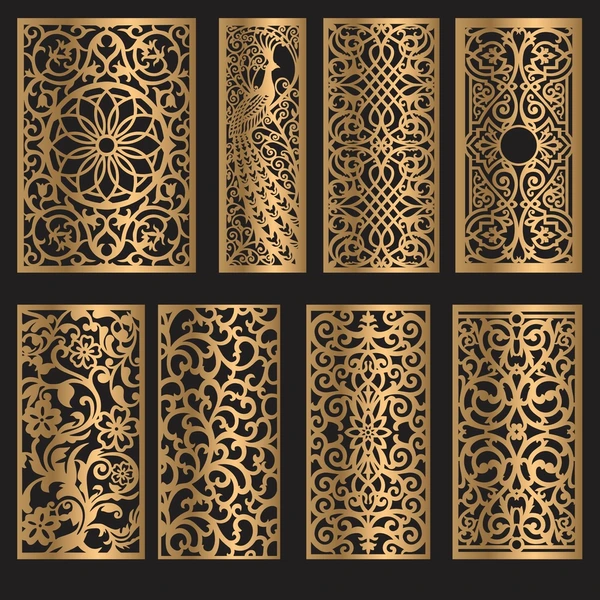
For centuries, the limitations of architecture were the limitations of the human hand and the mechanical saw. If a designer dreamed of a soaring, organic curve or a facade that mimicked the delicate veins of a leaf, they were often met with the harsh reality of “unbuildability” or astronomical costs. Today, that boundary has dissolved. We have entered an era where light specifically the concentrated power found in laser cutting machines has become the primary tool for shaping our physical world.
The shift from traditional masonry and standard steel beams to high-precision digital fabrication represents more than just a technical upgrade. it is a fundamental shift in how we perceive space, materiality, and the “skin” of the buildings we inhabit. By examining the laser cutting process, we can see a future where the rigid constraints of the Industrial Age are replaced by the fluid, “mass-customized” beauty of the Digital Age.
What is the Role of These Devices?
To the uninitiated, a laser cutter might seem like a glorified saw. In reality, laser cutting machines act as the sophisticated “printers” of the physical world. Their role in modern architecture is three-fold: precision, complexity, and structural innovation.
1. The Death of the “Standard” Component
In the mid-20th century, modernism was defined by standardization repeating the same window, the same beam, and the same panel to save costs. Laser cutting machines have flipped this script. Because a laser is guided by software rather than a physical template, it costs no more to cut 100 unique shapes than it does to cut 100 identical ones.
This has birthed the movement of “Parametricism.” Architects can now design facades where every single perforation is slightly different, optimized to block the sun at a specific angle or to create a shimmering visual gradient. This level of detail, once reserved for the cathedrals of the Renaissance, is now accessible for corporate headquarters and public libraries alike.
2. Mastering Heavy Metal with Light
While many are familiar with small-scale laser cutters for wood or plastic, the architectural world relies on heavy-duty systems. A tube laser cutting machine, for instance, is a marvel of engineering. It can take a massive structural steel pipe and cut complex, interlocking joints that allow the skeleton of a building to snap together with the precision of a Swiss watch.
By using a tube laser cutting machine, architects can move away from bulky, bolted gusset plates and toward elegant, “tree-like” structures. These branching columns not only look more natural but are often more efficient at distributing weight, reducing the total amount of steel required for a project.
3. Enhancing Material Honesty
The laser cutting process allows architects to work with materials in their purest form. Weathering steel (Corten), brushed aluminum, and even high-performance polymers can be etched or sliced without the physical distortion caused by traditional blades. This “clean” cut preserves the integrity of the material’s surface, allowing the natural aging and texture of the metal to become a central part of the design aesthetic.
Integration with Digital Design Tools
The magic of modern architecture doesn’t happen on the machine floor; it happens in the “handshake” between the architect’s computer and the laser’s controller. The integration of digital tools has shortened the distance between a “dream” and a “delivered part.”
The Direct Path from Script to Steel
Architects today rarely “draw” buildings in the traditional sense. Instead, they write scripts. Using tools like Grasshopper or Rhino, they create rules for how a building should behave. Once the digital model is finalized, the data is fed directly into a laser cut program.
This direct-to-fabrication workflow eliminates the room for human error. In the past, a fabricator might misread a blueprint or a tape measure might slip by a fraction of an inch. When a laser cut program translates the 3D model, the accuracy is measured in microns. This allows for “dry-fitting” the ability to assemble complex parts in a factory setting and know, with 100% certainty, that they will fit perfectly when they arrive at the construction site.
Prototyping at the Speed of Thought
One of the most humanized aspects of this technology is how it empowers the creative process. Before a single stone is laid for a skyscraper, architects use smaller laser cutting machines to create highly detailed “study models.”
Being able to hold a physical version of a complex geometry allows a designer to feel the proportions and see how light interacts with the surfaces. This iterative loop: design, laser-cut, refine has led to more thoughtful, human-centric buildings that prioritize the experience of the person walking through the door.
Specialized Techniques: Laser Die Cutting
In specialized architectural features, such as acoustic ceiling panels or intricate interior partitions, laser die cutting techniques are employed. Unlike traditional mechanical die cutting, which requires expensive physical molds, laser-based “die” cutting uses the beam to mimic the effect. This allows for incredibly delicate, lace-like patterns in softer materials or thin metallic foils that add a layer of tactile luxury to a space without the overhead of custom tooling.
The Sustainability Factor: Cutting Waste, Not Just Metal
We cannot discuss modern architecture without discussing its environmental footprint. The construction industry is one of the largest contributors to global waste. Here, the laser cutting process offers a hidden benefit: extreme efficiency.
When an architect uses a laser cut program, the software performs what is known as “nesting.” It calculates the most efficient way to arrange hundreds of different parts onto a single sheet of material, much like a complex game of Tetris. This minimizes scrap metal and reduces the energy required for recycling leftovers. Furthermore, because laser-cut components are so precise, they often require less welding and grinding on-site, which reduces the carbon emissions associated with heavy construction equipment.